
Mitchell & Ness Just Dropped Something You Actually Need to Buy
The new Negro Leagues Collection puts today’s biggest names in baseball’s most important uniforms — and a few of them are absolutely stunning.

What Mitchell & Ness released this week — in partnership with the Negro Leagues Baseball Museum and the MLBPA — is one of the more thoughtful uniform drops in recent memory. The concept alone is worth stopping on: What if the best players in baseball today had suited up for the Negro Leagues in the early 20th century? The brand didn’t just slap a name on a throwback template. They reimagined 14 current MLB stars as players from some of the most storied franchises in American baseball history — franchises that operated in the shadows of segregation but produced legends who belong in any conversation about the greatest to ever play the game.
The collection includes Aaron Judge, Juan Soto, Yordan Alvarez, Mookie Betts, Francisco Lindor, Oneil Cruz, Cristopher Sanchez, Riley Greene, José Ramírez, Teoscar Hernández, James Wood, Samuel Basallo, Luis Robert Jr., and Ronald Acuña Jr. — each placed on a Negro League franchise that shares a city, a history, or a geographic connection with their current club. The result is a line of authentic batting practice jerseys in 100% polyester mesh with full-button fronts, layered twill numbers and lettering, embroidered team logo patches on the right sleeve, and a Negro Leagues Baseball Museum label stitched into the lower inside back left. Every jersey is available in sizes S–5XL for $140.
That’s the product. Here’s the story.
Why This Collection Matters
The Negro Leagues didn’t just exist alongside Major League Baseball — for a stretch of American history, they were the highest expression of the game. The Kansas City Monarchs. The Pittsburgh Crawfords. The Homestead Grays. The Philadelphia Stars. These weren’t barnstorming novelties. They were professional franchises with rosters full of players who, under a different America, would have been household names from coast to coast.
The Negro Leagues Baseball Museum in Kansas City has spent decades making sure that history isn’t buried. MLB’s formal recognition of the Negro Leagues as Major Leagues in 2020 — and the subsequent incorporation of their statistics into the official record — was a seismic acknowledgment of what should have been obvious all along. And now Mitchell & Ness, which has built its entire brand identity on the idea that uniforms carry memory, is lending its craft to this chapter of the story.
The execution matters here. These aren’t costume-quality commemoratives. They’re authentic batting practice jerseys made to the same standard as anything in the Cooperstown Collection. The layered twill detailing is sharp, the NLBM museum patch adds institutional weight, and the overall construction signals that this is a collaboration that was taken seriously by everyone involved.
Fourteen jerseys. Five of them are especially worth your attention. Here’s the breakdown from my view.
The Rankings
1. Cristopher Sanchez — Philadelphia Stars
This one is the standout of the entire collection, and it’s not particularly close.
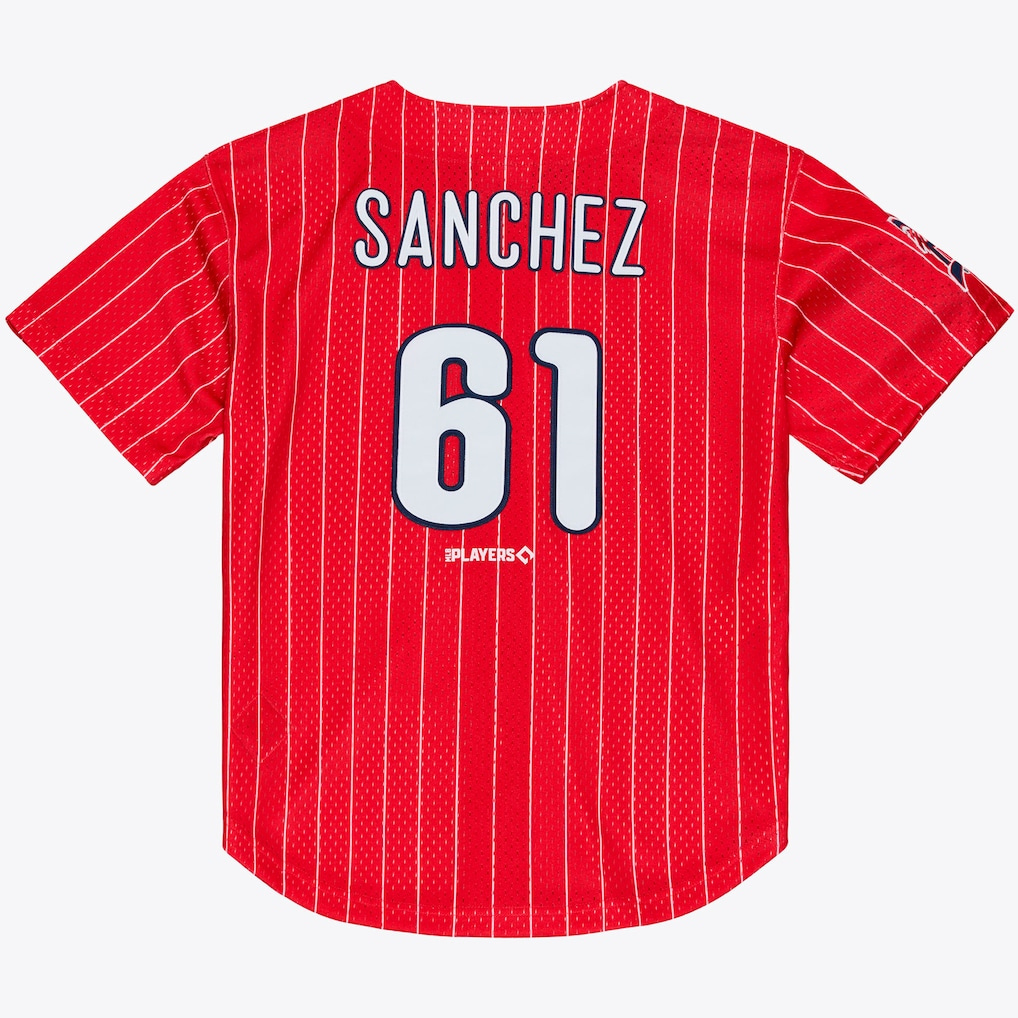
Sanchez pitches for the Philadelphia Phillies. The Philadelphia Stars were one of the Negro National League’s most distinguished franchises, founded in 1933 by Ed Bolden and operating out of West Philadelphia’s 44th and Parkside ballpark until 1952. They won the NNL championship in 1934, drew Satchel Paige in the twilight of his career, and featured Hall of Famers Biz Mackey, Jud Wilson, and Dick Lundy at their peak.
The geographic continuity between the Phillies and the Stars is obvious and makes the pairing feel earned. But what makes this jersey sing is the visual identity of the Stars themselves — a classic Philadelphia uniform built around a white and red-trimmed template with the Stars’ distinctive lettering. Placed on one of the most quietly dominant lefties in the game right now (36 wins, a 3.01 ERA, and an All-Star nod in 2024), it carries a certain weight. A southpaw ace in a city that has always loved its pitchers. There’s a continuity to it that the other jerseys in this collection don’t quite match.
The Stars’ script lettering across the chest is the kind of design that benefits from restraint, and this jersey delivers it. Sanchez is No. 61 in real life; seeing that number rendered in layered twill on a Stars uniform is the kind of anachronistic detail that makes these drops interesting.
Buy it because: It’s the best marriage of player, franchise, and design in the collection. A Phillies fan who understands what the Stars represent owns this one without thinking twice.
2. Riley Greene — Detroit Stars
The Detroit Tigers and the Detroit Stars share more than a city — they share a century of baseball culture in the same ballpark footprint. The Stars were a charter member of the original Negro National League in 1920 and produced three Hall of Famers: Turkey Stearnes, Andy Cooper, and Pete Hill. Stearnes, in particular, is one of the most underrated power hitters in baseball history, with 187 home runs and a .348 career average across 20 seasons.
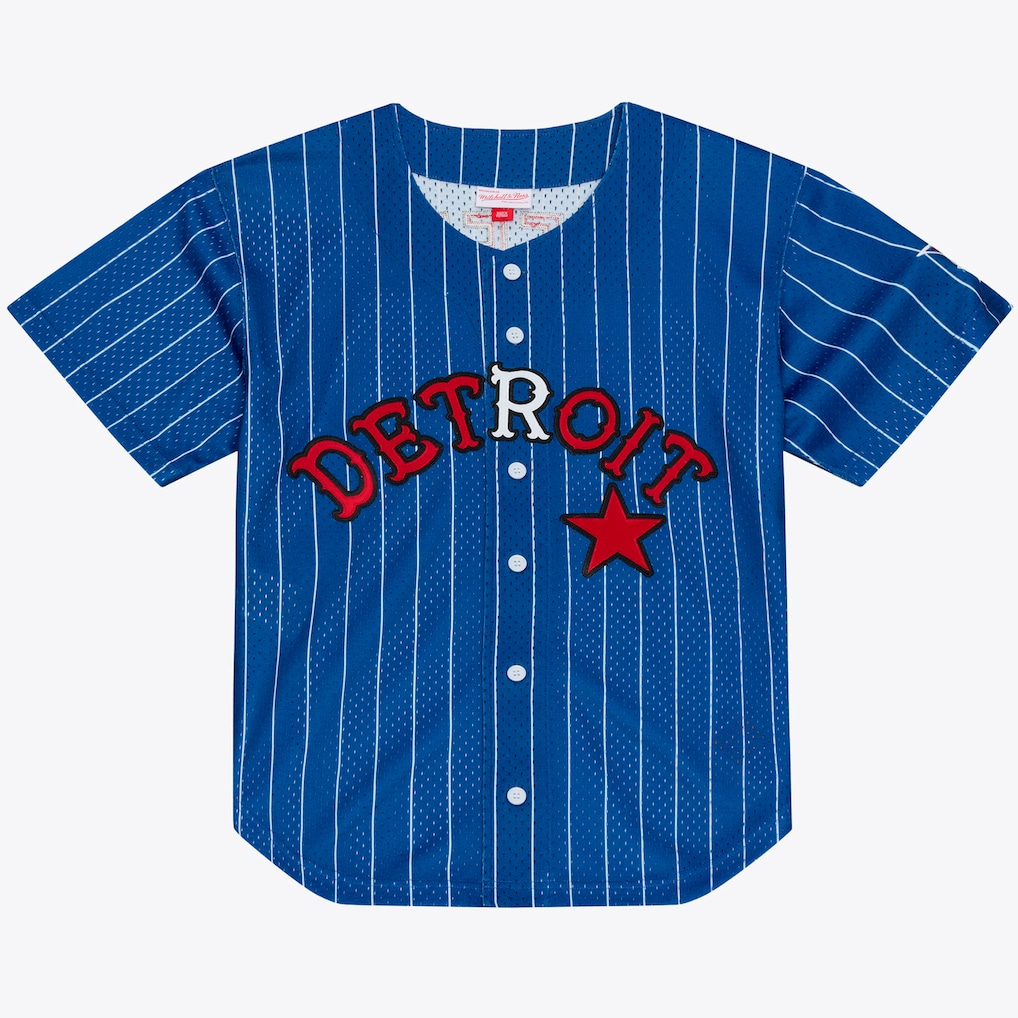
Riley Greene is 25 years old and already one of the most exciting outfielders in the American League. The idea of him wearing a Detroit Stars uniform is immediately compelling because the Stars were built around center fielders — Stearnes roamed those outfields the same way Greene does today, with speed, instincts, and a feel for the game that statistics only partially capture.
What sets this jersey apart is the color. The Detroit Stars’ classic navy and red palette is one of the cleanest looks in Negro League history, and the layered twill execution here honors it well. Greene’s number rendered in Stars numerals against that template is the rare case where the alternate-history conceit of this collection genuinely enhances both the player and the franchise.
Buy it because: Detroit’s baseball history runs deeper than Comerica Park, and this jersey is the cleanest way to hold both threads at once.
3. Aaron Judge — New York Black Yankees
The obvious pick, and obvious for good reason.
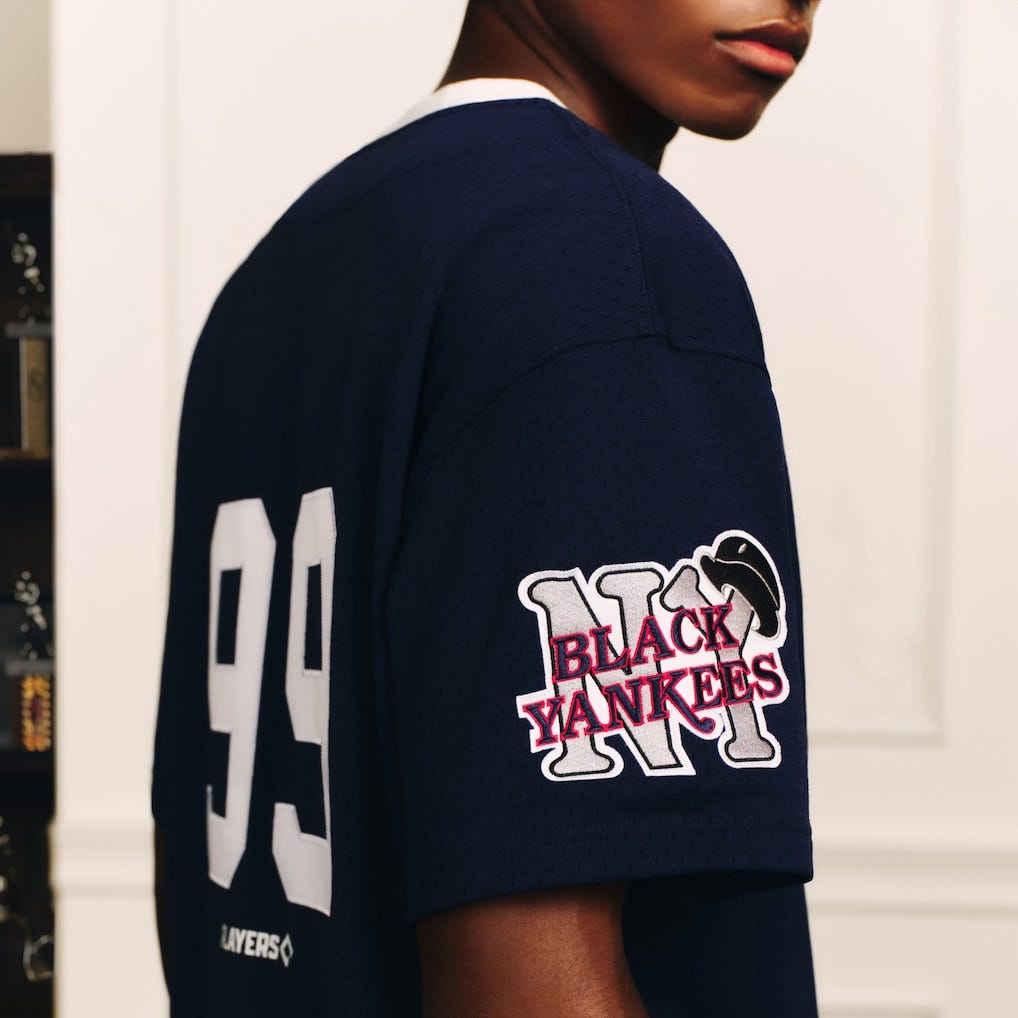
The New York Black Yankees were founded in Harlem in 1931, joined the Negro National League in 1936, and played most of their home games at Yankee Stadium — the same stadium where Aaron Judge currently plays and where he hit 62 home runs in 2022. The symmetry is almost too clean. The Black Yankees were considered one of Black baseball’s “glamour franchises” even in seasons when they struggled on the field, partly because of their address and partly because Harlem in the 1930s and 40s was a cultural epicenter unlike anything else in the country.
Mitchell & Ness put Judge in a navy authentic batting practice jersey with white detailing — the Black Yankees logo patch on the right sleeve, the NLBM label inside, No. 99 in layered twill. It’s immediately recognizable as a Judge jersey because 99 is not a number that belongs to anyone else in this sport right now, and yet it reads as authentically vintage.
The reason this lands at No. 3 rather than higher is purely a function of the other two being more surprising. Judge in a Black Yankees jersey makes complete sense from the first moment you see it. The Sanchez and Greene pairings require a second of context — and then they reward it.
Buy it because: If you own any Judge merchandise at all, this is the one that actually has a story behind it.
4. Yordan Alvarez — Houston Eagles
The Houston Astros connection here runs through a fascinating piece of baseball migration history. The Houston Eagles weren’t an original franchise — they were born from the Newark Eagles, the champions of the 1946 Negro League World Series, who relocated to Houston in 1949 after Jackie Robinson’s integration of the major leagues accelerated the financial decline of the Negro Leagues. The once-mighty Newark franchise, which had featured stars like Monte Irvin and Don Newcombe, landed in a southern city that had its own rich but complicated baseball culture. The Houston Eagles lasted just two seasons before moving again.
Yordan Alvarez is one of the most feared hitters in baseball — a three-time All-Star, a World Series champion, a career .298 hitter with 190 home runs already banked before his 29th birthday. The Eagles were built around powerful, imposing hitters. The lineage is a little indirect, but the Astros have actually worn Houston Eagles tribute uniforms on multiple occasions, which gives this pairing more institutional grounding than it might otherwise have.
The jersey itself carries the Eagles’ distinctive color palette, and the NLBM patch provides the connective tissue between the modern Astros star and a franchise that deserves more attention than it typically gets in conversations about Negro League history.
Buy it because: The Houston Eagles are one of the more overlooked chapters in the Negro Leagues story, and Alvarez wearing their uniform is one of the more educational drops in the collection.
5. Oneil Cruz — Pittsburgh Crawfords
Close this list with arguably the richest historical pairing in the set.
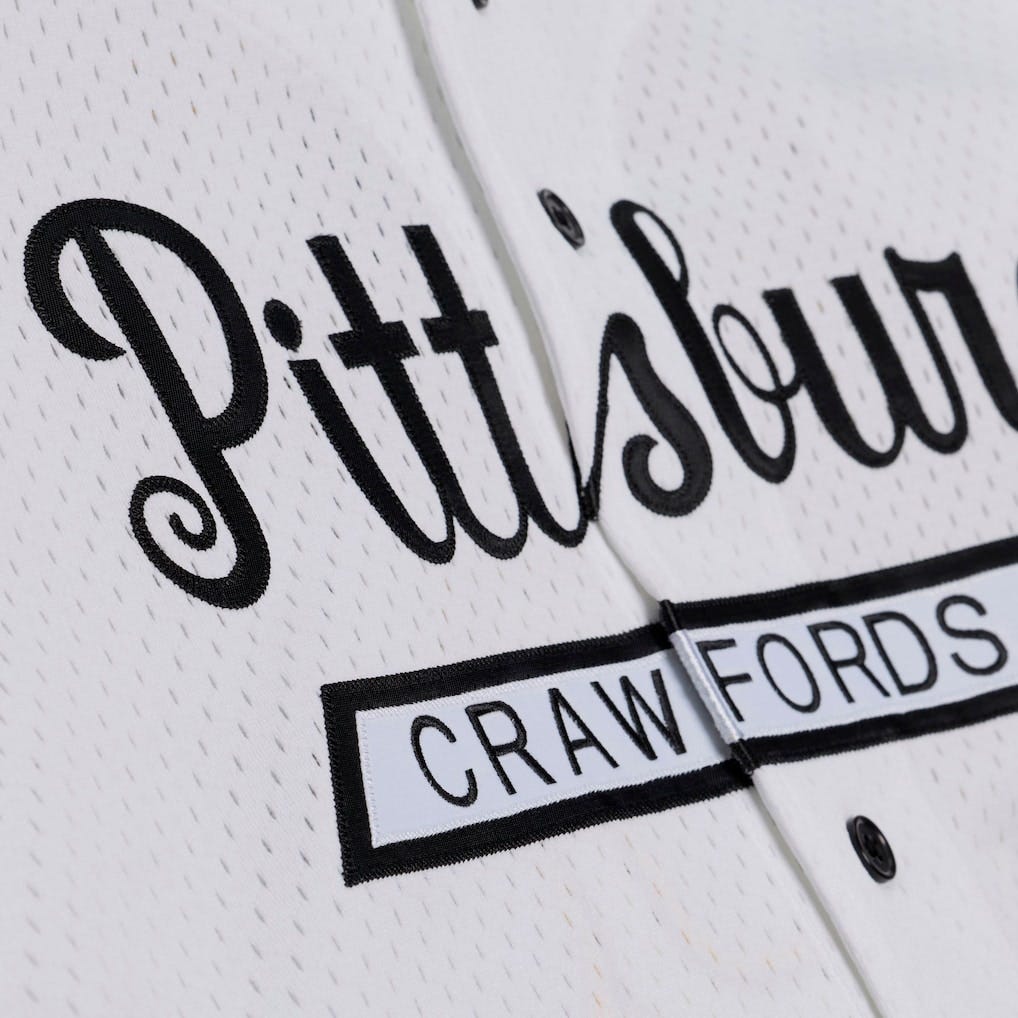
The Pittsburgh Crawfords were not merely a great Negro League team. They were, by any reasonable accounting, one of the greatest baseball teams ever assembled under any circumstances. The 1933 Crawfords roster featured a record seven future Hall of Famers: Cool Papa Bell, Josh Gibson, Judy Johnson, Jud Wilson, Oscar Charleston, Satchel Paige, and Biz Mackey. They played at Greenlee Field, the first Black-owned stadium in professional baseball, and they defined what Black baseball looked like at its apex.
Oneil Cruz plays for the Pittsburgh Pirates — the Crawfords’ direct geographic successors in a city that has always produced hard-nosed, tool-heavy baseball players. Cruz led the National League in stolen bases in 2025. He’s 6-foot-7 and runs like someone who was built wrong for a baseball player and somehow makes it work better than everyone else. The Crawfords, led by Cool Papa Bell — still one of the fastest players in the recorded history of the game — would have had a use for someone exactly like Cruz.
The reason this lands at the bottom of the list is entirely aesthetic, not historical. The Crawfords’ jersey template here is excellent, but Cruz’s number doesn’t jump off the template the way the others in this collection do. The history is unimpeachable. The fit is conceptually perfect. The jersey just doesn’t deliver the same visual jolt as the top three.
Buy it because: The Pittsburgh Crawfords deserve to be on every baseball fan’s radar, and this is the most accessible entry point to that conversation that exists right now.
The Bigger Picture
Mitchell & Ness has always operated at the intersection of nostalgia and identity — the idea that the jersey you wear says something true about who you are and what you know. This collection goes one step further. It asks a question that American sports have spent decades avoiding: What could these players have been in a different country?
The answer, if you spend any time with it, is this: they could have been the same. The talent was always there. The infrastructure was always there. The Negro Leagues proved it. What wasn’t there was the willingness of the people running Major League Baseball to see what was directly in front of them.
A $140 batting practice jersey can’t carry all of that weight. But a partnership between Mitchell & Ness, the MLBPA, and the Negro Leagues Baseball Museum — one that takes the craft seriously and puts the history front and center — is at least a gesture in the right direction.
The full collection of 14 jerseys is available now at mitchellandness.com.