
Baseball Is Playing a Different Game Off the Field
From Play Ball Weekend to The GIST to a music-meets-MiLB capsule collection, MLB is executing one of the most cohesive brand expansion strategies in professional sports. Here’s what it actually means.

There’s a version of baseball that still gets written about as a sport in decline — aging demographics, competition from the NBA and NFL for the attention economy, a pace-of-play problem that years of rule-tinkering tried to fix. That version of the story has some truth to it. It also misses what’s been quietly happening in the background.
Over the last few weeks, MLB has made three moves that, individually, each make sense on their own terms. Together, they outline something more coherent: a league that has identified the audiences it was already reaching but not fully serving, and is now building the infrastructure to capitalize.
Play Ball Weekend. A partnership with The GIST. And a sold-out, music-meets-minor-league apparel collab called Local Legends that just announced its 2026 expansion.
None of these are flashy. None of them are a nine-figure signing. But they are smart, and right now, smart is exactly what baseball needs.
Play Ball Weekend Is Bigger Than a PR Event
Play Ball Weekend has existed in some form since 2015. This year’s iteration — running June 5–7 — has grown into something that’s worth looking at more carefully than the press release invites.
The numbers are real: over 200 events, all 30 MLB clubs, all 120 MiLB clubs, six continents, and more than 60,000 Franklin Sports bat-and-ball sets being distributed for free in communities, playgrounds, and backyards. Bobby Witt Jr., the Kansas City Royals All-Star shortstop and MLB’s first-ever Major League PLAY BALL Ambassador, has lent genuine star power to an initiative that could easily have become generic. The league is tying the weekend to a Toy Story 5 TV spot featuring Mookie Betts and his daughter Kynlee — which isn’t just clever cross-promotion; it’s a deliberate signal about who MLB wants watching baseball.
But the more interesting brand story isn’t the national campaign. It’s what individual clubs are doing at the local level.
The Arizona Diamondbacks are hosting nearly 1,500 Native American youth athletes through their Inter-Tribal Youth Baseball & Softball Tournament — the only event of its kind operated by a Major League club. The Los Angeles Dodgers are running dual-language clinics at a Santa Monica elementary school for 400 kids. The Minnesota Twins are partnering with NubAbility to run free clinics for limb-different athletes. The Baltimore Orioles are giving kids with developmental and physical challenges their own Pitch, Hit, and Run competition through the Challenger League for the first time.
These aren’t photo opportunities. They’re the kind of equity-focused, community-rooted programming that, when done consistently over time, builds the kind of durable fandom that no marketing campaign can manufacture at scale. The Sports and Fitness Industry Association data backs up that the investment is working: since the PLAY BALL initiative launched in 2015, casual baseball participation for ages 6 and up has increased 144%, and baseball and softball have been the most-participated team sport among 6-12 year-olds for each of the last five years.
What Play Ball Weekend is really doing — when you strip away the event infrastructure and the partnership announcements — is building the next generation of fans by meeting kids where they are, giving them equipment, and making the sport feel accessible. That’s not a short-term marketing play. That’s brand-building with a 15-year horizon.
MLB Finally Started Marketing to the Fans Who Were Already There
The partnership with The GIST, announced in May, is quietly one of the most candid brand moves the league has made in recent memory.
The GIST launched in 2018 with a founding premise: that female fans and the audiences historically overlooked by mainstream sports media deserved better coverage. It now reaches more than 40 million fans monthly across its newsletter, social channels, and podcast. More than a million of those are newsletter subscribers. These are not casual users. They are engaged, loyal, and — per The GIST’s own audience data — increasingly interested in baseball specifically.
According to MRI-Simmons data cited at the time of the announcement, MLB is already the most attended sports league among women in America. Think about that for a second. Baseball wasn’t a niche women’s sport trying to build crossover appeal. Women were already attending more MLB games than any other professional league. The audience was there. The content strategy wasn’t.
Alex Cadicamo, MLB’s VP of Media Business Development and Strategy, framed it plainly: the league has always had a dedicated female fan base, and it’s continuing to see growing engagement from women and younger audiences. The GIST partnership is the formal acknowledgment that the marketing infrastructure needed to catch up to the attendance data.
The financial signals underneath this decision are worth noting too. Deloitte projected women’s sports would cross the $1 billion revenue threshold in 2024. The actual figure came in at $1.8 billion — nearly double the projection. CivicScience data from 2026 shows that among MLB viewers, the growth in sports betting intent is being driven primarily by women fans, with a three-point year-over-year jump compared to a single-point uptick among male fans. That’s not passive fandom. That’s deepening engagement.
The GIST’s co-founder Jacie deHoop noted that over the last year, baseball showed the single largest jump in interest with their audience of any sport. The league is now creating tailored content across newsletter, social, and podcast formats for a community that was already paying attention and just needed the league to pay attention back.
This is the long overdue brand correction. It’s also a template. The GIST partnership sits alongside MLB’s existing commitment to the Athletes Unlimited Softball League, and the two together suggest a league that is finally treating female fandom as an established audience to be served — not a demographic to be courted from a distance.
The Local Legends Series Is the Most Interesting Model in Minor League Baseball
Of the three moves, this one has the clearest commercial upside and the fewest people talking about it.
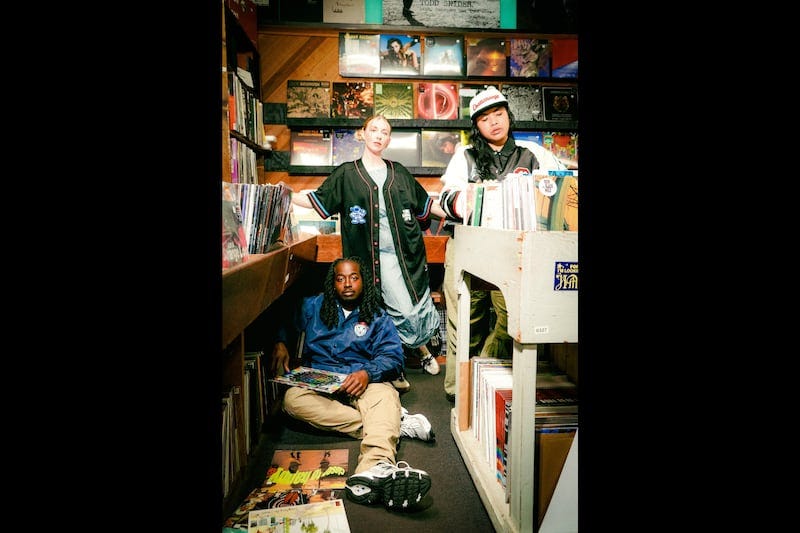
Official League — the Portland-based premium headwear and apparel brand — launched its Local Legends Series with MiLB in 2025. The concept is straightforward: pair a musician with a minor league team from their hometown, build a limited-edition capsule collection rooted in local identity, and bring the artist to a game-day activation during the season. The inaugural run sold out. Collaborations with Fall Out Boy and the Iowa Cubs, The Killers and the Las Vegas Aviators, and Coheed and Cambria and the Brooklyn Cyclones drove the kind of hype that MiLB gear doesn’t typically generate.
For 2026, the program is expanding. The first drop launches July 18 with Kameron Marlowe and the Kannapolis Cannon Ballers, including a scheduled in-person game-day appearance.
What makes this more interesting than a standard licensing deal is what it represents structurally. Minor league baseball’s brand problem has never really been lack of awareness — most markets have genuine affection for their local clubs. The problem has been merchandise that felt generic and a fan experience that, outside the ballpark, had very little cultural identity. Local Legends solves both at once by tapping into something authentic: the actual relationship between artists and the towns they came from.
Official League founder Alan Miller described it as music and sports amplifying each other — not just coexisting. That framing matters. The best versions of sports-and-culture crossovers don’t feel like a league licensing its logo to a trending brand. They feel like two things that were already related finally being acknowledged as such.
For MiLB, which operates in the community fabric of its markets in ways that MLB clubs simply can’t replicate, this is a vehicle for cultural relevance that extends far beyond the stadium. A Fall Out Boy fan in Des Moines who picks up an Iowa Cubs collab piece because they love the band and happened to grow up with the team is now a merch customer, potentially a ticket buyer, and almost certainly a person who tells people about both. That’s the conversion path that traditional licensed sports apparel almost never achieves.
The sell-out performance in year one validated the concept. The expansion to 2026 is the league committing to scale it.
What These Three Things Have in Common
Play Ball Weekend is about seeding the next generation of fans by making the sport accessible to kids who might never have encountered it otherwise. The GIST partnership is about finally marketing to the female audience that MLB already had. The Local Legends series is about building a cultural identity for minor league baseball that doesn’t depend entirely on what happens between the lines.
They are three different plays. They are also, at their core, the same play: finding the audiences that baseball was already reaching and building something real for them.
The leagues that win over the next decade aren’t going to be the ones with the most eyeballs on any given Sunday. They’re going to be the ones that built durable, diverse communities of people who feel like the sport actually sees them. Baseball, this summer, is making the case that it understands the assignment.